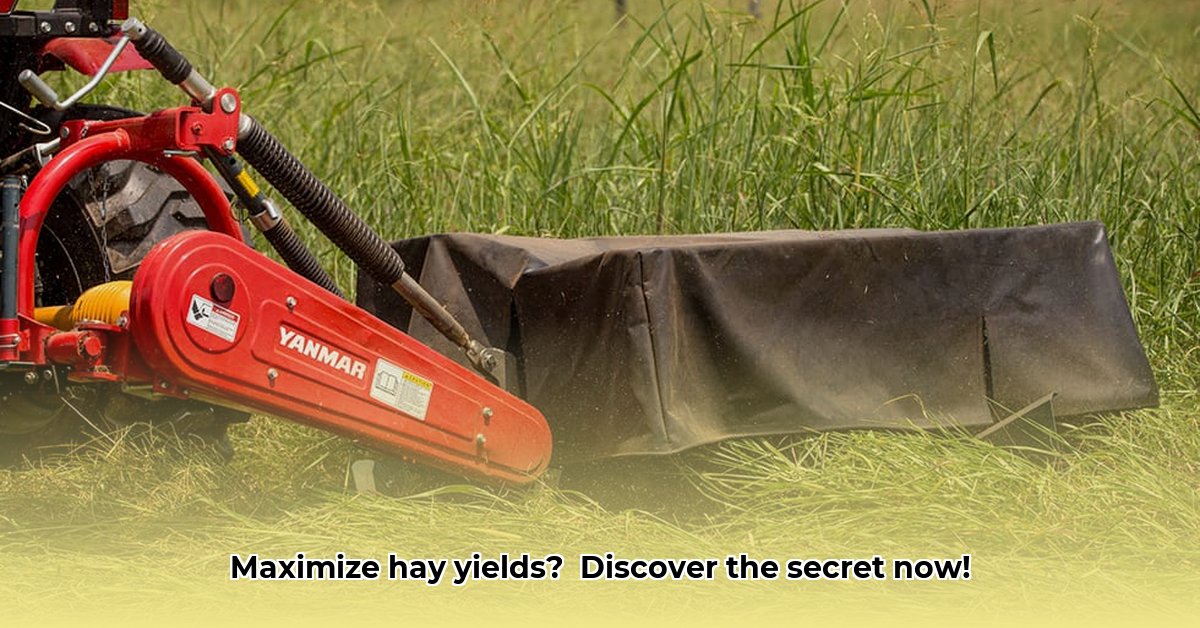
Compact Tractor Disc Mowers: Your Key to Sustainable Hay Harvesting
Looking to increase your hay yields while minimizing your environmental impact? Compact tractor disc mowers offer a compelling solution for sustainable hay farming. These machines allow for efficient and environmentally conscious hay harvesting, making them an attractive option for farmers of all sizes. For more in-depth information, check out this helpful resource: Compact Tractor Disc Mowers. This comprehensive guide will equip you with the knowledge to effectively utilize compact tractor disc mowers for optimal results.
Choosing the Right Compact Tractor Disc Mower: Finding Your Perfect Match
Selecting the ideal compact tractor disc mower requires careful consideration of several factors. First, assess the size of your operation. A large farm necessitates a more powerful and potentially wider-cutting mower than a smaller operation. Next, evaluate your field's topography. Hilly or rocky terrain demands a mower with superior maneuverability. Cutting width is crucial: wider cuts reduce passes, saving you time and fuel, but maneuverability may be compromised in uneven terrain; finding the right balance is key.
The type of forage also plays a significant role. Different crops require different cutting heights for optimal yield and quality. Research the best cutting height for your specific forage to avoid damaging the plant's crown and impacting future growth. A robust gearbox is vital for longevity, especially on uneven land. Prioritize mowers designed to minimize soil compaction and maximize fuel efficiency; easy access to maintenance components is another major plus.
Sustainable Hay Harvesting Techniques: More Than Just a Machine
Sustainable hay production extends beyond equipment choice; it embraces smart practices. Implementing the following strategies can significantly improve your sustainability and harvest yield.
Optimal Cutting Height: Cutting hay too short damages the plant’s crown, hindering regrowth. Experiment to determine the ideal height for your specific forage, ensuring sufficient crown preservation for optimal regrowth. This strategy directly impacts long-term yields.
Precise Harvesting Timing: The stage of growth at harvest significantly impacts yield and nutritional value. Research the ideal mowing time for your region and specific crop. Seasonal and climate variations impact ideal harvesting time.
Efficient Mowing Patterns: Strategic planning of mowing routes minimizes soil compaction. Avoid repetitive passes over the same areas. GPS guidance systems can enhance route efficiency and reduce compaction.
Comprehensive Field Management: Employ crop rotation to prevent soil depletion. Incorporate cover crops to improve soil health, stability, and fertility between main hay crops.
Compact Tractor Disc Mowers: Efficiency and Environmental Friendliness Hand-in-Hand
Compact tractor disc mowers offer several advantages promoting both efficiency and environmental sustainability:
Fuel Efficiency: These mowers are typically designed for optimized fuel consumption, lowering operating costs and reducing your carbon footprint. Compared to larger equipment, they offer superior fuel efficiency.
Reduced Soil Compaction: Their smaller size and weight minimize soil compaction, preserving soil health and long-term productivity.
High-Quality Cuts: Clean, precise cuts accelerate hay drying, reducing spoilage and maximizing yield.
Simplified Maintenance: Ease of access to maintenance components simplifies routine upkeep, reducing downtime.
Comparing Compact Disc Mowers to Other Options: A Quick Look
Compact disc mowers offer a viable alternative to other hay harvesting methods. Flail mowers, while versatile, often demonstrate lower fuel efficiency. Rotary mowers excel in smaller areas but generally have narrower cutting widths. Compact disc mowers provide a balance of cutting width, fuel efficiency, and maneuverability, though the best choice depends on individual operational needs.
Making the Investment: Is it Worth It?
The initial investment in a compact tractor disc mower can be substantial, but the long-term returns often surpass the upfront cost. Lower fuel costs, reduced maintenance, and higher yields contribute to a positive return on investment (ROI). Furthermore, adopting sustainable practices builds soil health and farm resilience.
The Future of Sustainable Hay Harvesting: What’s on the Horizon?
The future of hay harvesting features ongoing innovation. Expect advancements in fuel-efficient engines, precision-guided mowing systems, and technologies designed to maximize yields while minimizing environmental impact. Research into eco-friendly materials and efficient designs continues, promising further improvements in sustainable hay production.
How to Minimize Soil Compaction During Sustainable Hay Harvesting
Key Takeaways:
- Minimizing soil compaction is vital for maintaining long-term soil health and maximizing hay yields.
- Utilizing lighter equipment, proper tire inflation, and implementing controlled traffic systems effectively reduce compaction.
- Strategic harvesting timing and planning significantly lessen the impact of heavy machinery.
- Investing in precision agriculture technology opens further avenues for optimization.
Soil compaction significantly impacts hay yields. Heavy machinery, particularly in wet soil, reduces air and water penetration, negatively affecting plant growth. The following strategies help mitigate compaction and promote sustainable practices.
Understanding the Enemy: Soil Compaction
Soil compaction restricts air and water movement, hindering root growth and reducing yields. Heavy machinery in wet conditions severely exacerbates this issue, impeding plant growth and water absorption.
Strategies for Success: Minimizing Compaction
Strategic Harvesting Timing: Avoid harvesting in excessively wet conditions. Wait for optimal soil moisture levels, prioritizing long-term yield over immediate convenience.
Appropriate Equipment Sizing: Lighter machinery minimizes soil pressure. Compact tractors with appropriate disc mowers provide an effective approach to improving efficiency and lowering compaction.
Optimal Tire Inflation: Correct tire pressure distributes weight, lessening ground pressure. Regularly check and adjust tire inflation per equipment manufacturer's recommendations to optimize performance.
Controlled Traffic Systems (CTS): CTS establishes designated travel paths for equipment, minimizing disturbance outside these areas. This systematic approach minimizes soil compaction.
Precision Agriculture Technology: Utilizing sensors and GPS guidance systems enables real-time soil condition monitoring and optimizes equipment operation. This data-driven method enables both increased efficiency and decreased soil compaction.
Investing in the Future: Long-Term Soil Health
Sustainable hay harvesting is about building soil health for long-term gains. The initial cost of lighter equipment and precision agriculture technology translates to increased yields and healthier soil over multiple harvests.
Practical Tips: Putting It All Together
- Regular soil testing: Monitor soil health to identify and address potential problems proactively.
- Crop rotation: Improves soil structure and reduces compaction susceptibility.
- Cover crops: Enhance soil structure and prevent erosion, contributing to overall soil health.
By integrating these strategies, you can significantly reduce soil compaction, leading to healthier soil, improved yields, and a more sustainable hay production process. Healthy soil is the foundation of abundant hay harvests.